


Bridging Neurobiology and Healing — My Talk at the 18th World Congress of Biological Psychiatry, Jaipur

Standing before a room of leading psychiatrists, neuroscientists, and clinicians at the 18th World Congress of Biological Psychiatry in the vibrant city of Jaipur this August 2026 was one of those moments for me.
It was a genuine privilege to present at this globally significant gathering — held this year at the Novotel Convention Centre under the theme "Biological Psychiatry in a Changing World: Exploring New Frontiers." Amid discussions on biomarkers, precision psychiatry, and emerging therapeutics, I was honoured to bring a perspective that sits at the intersection of cutting-edge science and deeply human care.
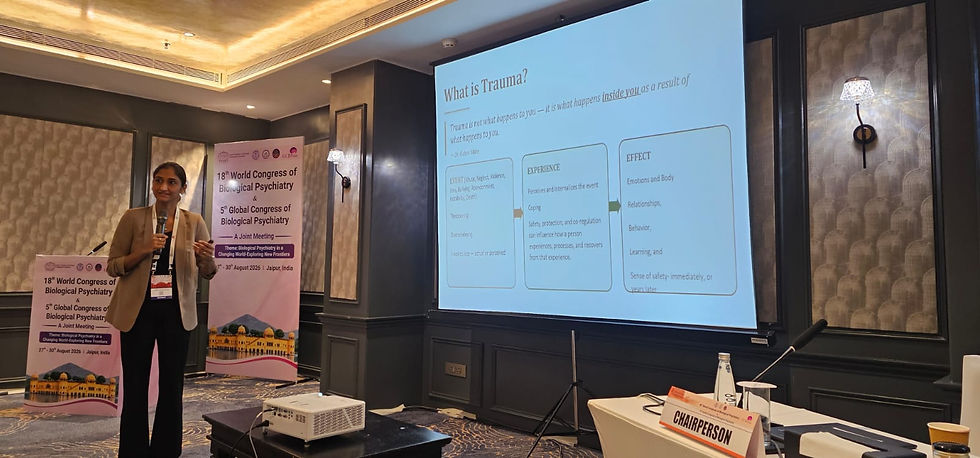
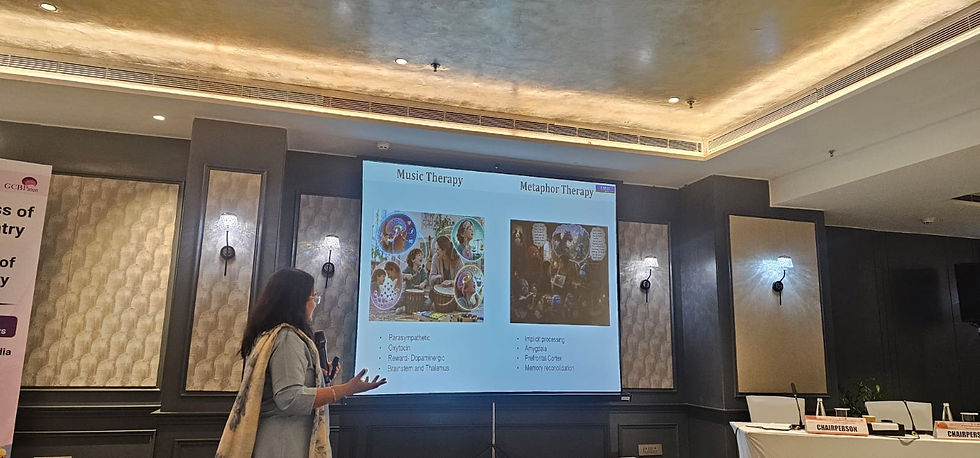
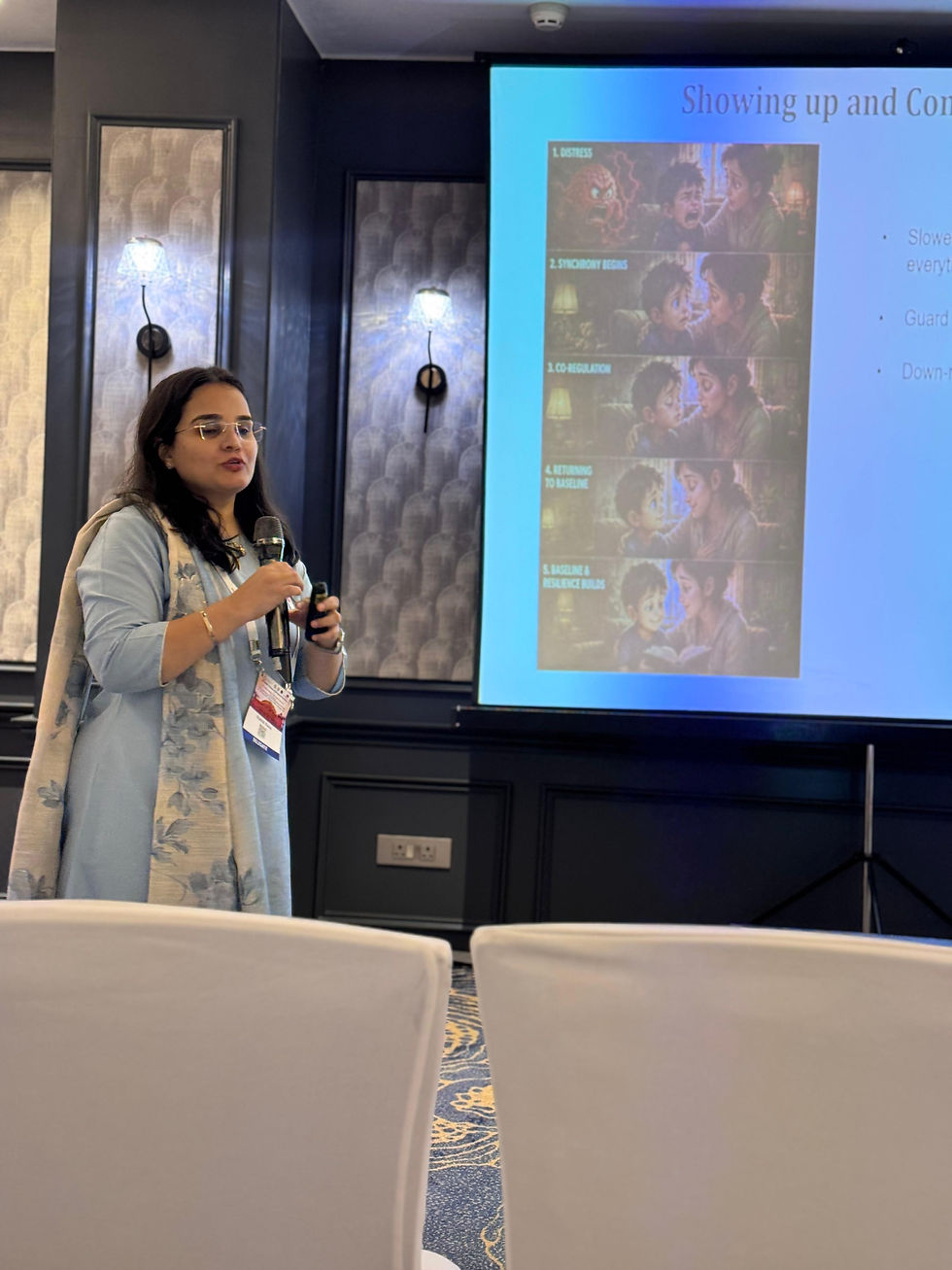
The Talk: Neurobiology of Trauma-Informed Therapy
My presentation, delivered alongside Saidyah Mohammed of Emancipation, focused on the neurobiology of trauma-informed therapy — a topic that matters now more than ever.
Trauma does not simply live in memory; it reshapes the brain. The amygdala becomes hypervigilant, the hippocampus struggles to sequence time and context, and the prefrontal cortex loses its regulatory grip. For years, these findings lived largely in neuroscience journals. But what happens when we bring this understanding directly into the therapy room?
That was the heart of our talk: when clinicians understand why a survivor's brain reacts the way it does, therapy becomes more than a technique — it becomes attunement. A trauma-informed approach isn't a separate modality; it is a lens grounded in neurobiology, reminding us that behaviour is often not defiance or resistance, but adaptation.
Why This Conversation Matters
What made this experience especially meaningful was the cross-pollination it represents. Biological psychiatry has historically focused on molecules, circuits, and systems. Trauma-informed care has lived more in the psychosocial and clinical world. Our presentation aimed to show that these aren't separate tracks — they are two languages describing the same profound truth: the brain and the lived experience are inseparable.








Comments